
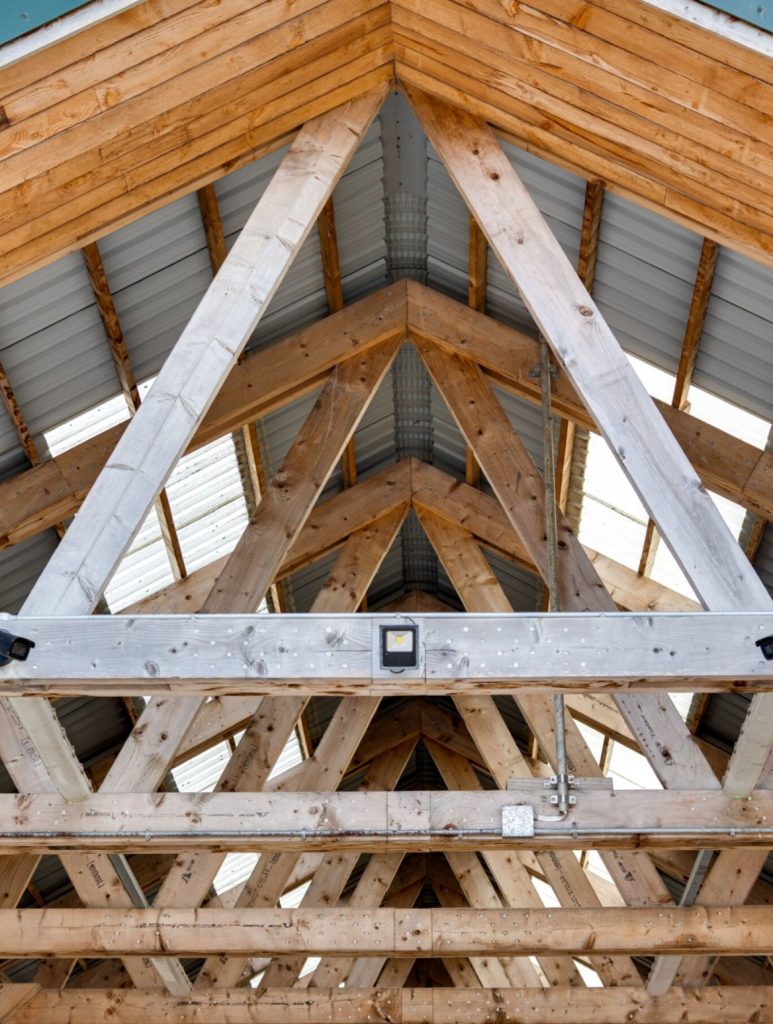
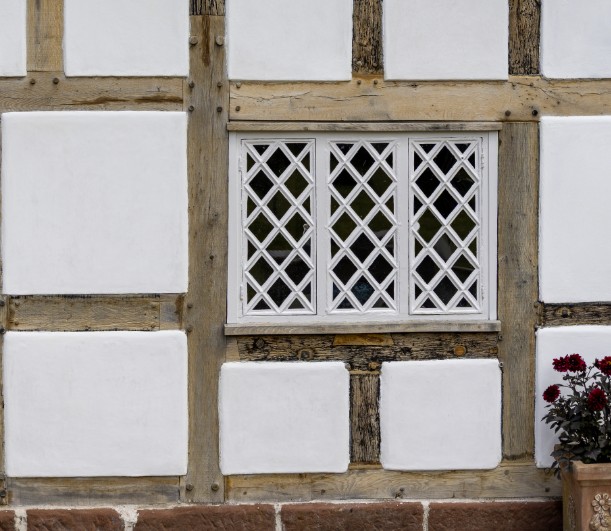
Whether for its aesthetics or its environmentally friendly qualities, architects, engineers, and designers are increasingly turning to timber as the primary material in their projects, in recognition of its sustainability, warmth, and natural beauty.
We produce premium C24 and C27 British graded softwood structural timber that can bear the heaviest loads and with wider beams to span larger distances, enabling the construction of more complex and ambitious structures.
From our state-of-the-art facility, we produce graded timbers that are certified for use in domestic and commercial construction, supplying the optimal timber to meet the needs of your project that can be crafted to any specification.
Structural Softwood Graded Timbers
Strength Class | Bending Strength (f_m,k) | Mean Stiffness (Em,0,mean) | Common Applications |
C16 | 16N/mm2 | 8kN/mm2 | Internal stud walls, short-span floor joists, and rafters. |
C18 | 18N/mm2 | 9kN/mm2 | Mid-strength joists and small roof trusses. |
C22 | 22N/mm2 | 10kN/mm2 | High-load rafters and joists; typically specified by engineers to save on timber depth vs C16. |
C24 | 24N/mm2 | 11kN/mm2 | Premium standard for long-span floor joists, flat roofs, and balconies. |
Strength classes
(C16 - C24 for softwoods) and compliance with BS EN 14081-1. Below is an example of a technical specification for standard structural carcass timber used in the UK.
Technical Specification: Structural graded softwood (C24)
| Category | Specification Details | Standards & Compliance |
| Strength class | C24 (coniferous/softwood) | BS EN 338 / BS EN 1912 |
| Grading method | Machine strength graded or visual (SS grade) | BS EN 14081 / BS 4978 |
| Moisture content | Kiln dried (KD) to < 20% | BS EN 13183-2 |
| Bending strength | 24 N/mm² (characteristic) | BS EN 338 |
| Surface finish | Regularised (planed all round) with eased edges | Industry standard |
| Dimensional tol. | +/- 1mm thickness; +/- 2mm width | BS EN 336 (class T1/W1) |
| Preservation | Pressure treated (e.g., Tanalith E) | BS 8417 (use class 1 or 2) |
| Sustainability | FSC | Chain of custody required |
| Identification | Grade stamp must be visible on every piece | BS EN 14081-1 |
